
The best diving spots on the Costa Verde
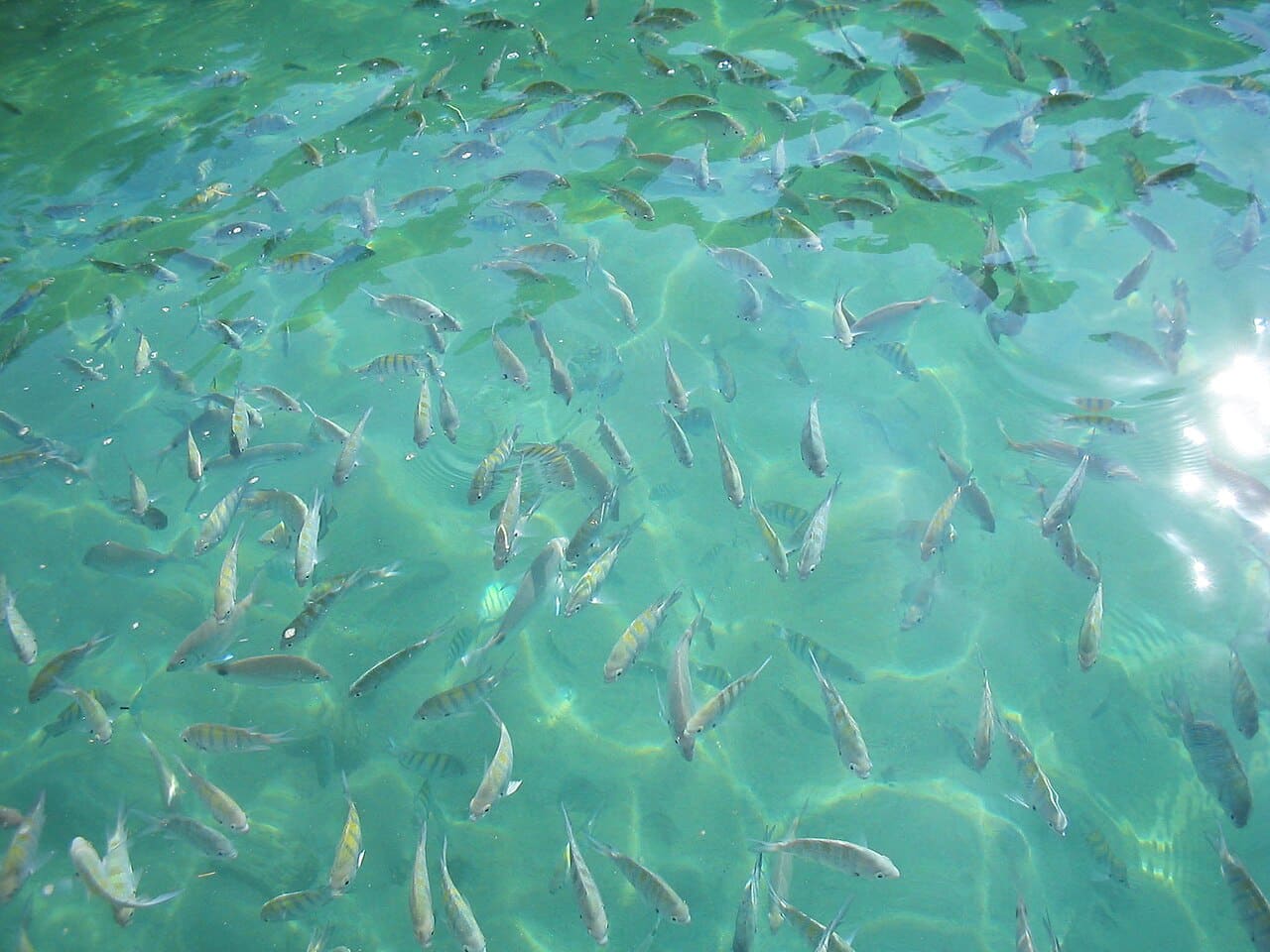
Every week a guest lands at our front desk with a certification card in their backpack and the same question: is there diving around here? We work this sea all year, with a schooner crossing Ilha Grande bay out of Paraty and boat departures in Ilhabela, so the answer comes with the confidence of people who live on it, and with one honest disclaimer up front: we do not operate tank diving ourselves. What follows is the map we would hand a friend, with the real sites, the right kind of operators to look for (no brand names, on purpose) and expectations properly calibrated.
And they do need calibrating. The sea here is green, not Caribbean blue. Typical visibility runs between 3 and 10 meters, reaching 15 on the best winter days, and that color is exactly why there is so much life: nutrient-loaded water feeds the whole chain, from coral to goliath grouper. Anyone expecting an infinity pool leaves disappointed; anyone expecting encounters with turtles, groupers, rays and seahorses tends to climb out of the water talking to themselves.
Ilhabela: a backyard full of shipwrecks
The São Sebastião channel has been a shipping route since colonial times, and centuries of navigation collect their toll: the Ilhabela archipelago holds the largest concentration of diveable wrecks on the São Paulo coast, with ten hulls mapped on the bottom. Three of them are easy to reach and form the backbone of the island’s recreational diving: the Velázquez, the Therezina and the Aymoré.
The Aymoré deserves a highlight for beginners: it rests at about 9 meters, close to the surface, which makes it one of the rare wrecks in Brazil accessible even on a first dive. Going underwater for the first time in your life and meeting a hull covered in coral and schooling fish is a hard opening chapter to top. At the far end of the scale sits the Príncipe de Astúrias, the Spanish ocean liner that sank off the island’s coast in 1916 in one of the country’s worst maritime tragedies: today it is a deep technical dive, beyond recreational limits, and it lives more in the island’s imagination than on any visitor’s itinerary.
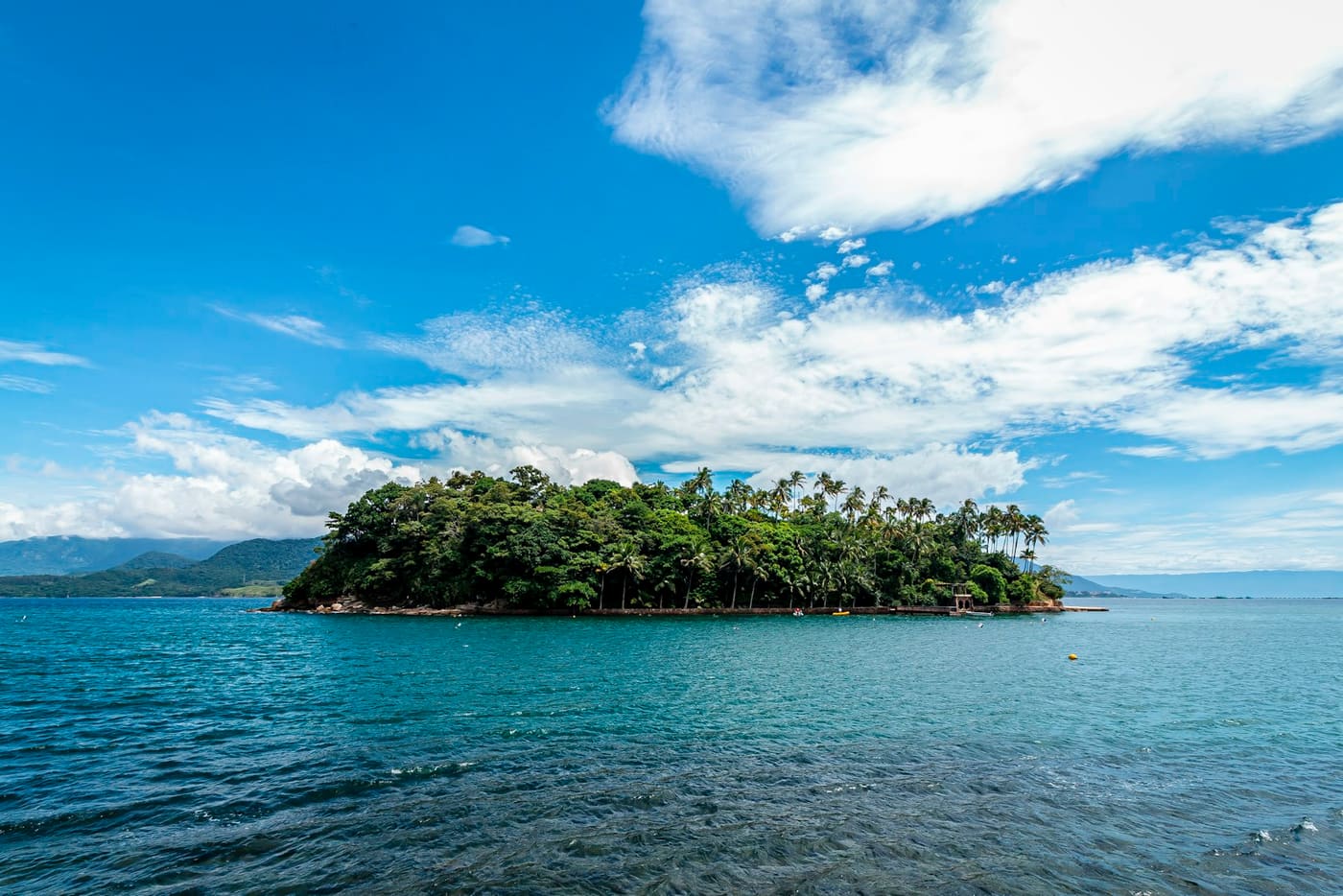 The sea around Ilhabela: green with nutrients, and that is what feeds the life below. Photo: Marcos Assis, Unsplash
The other calling card is Ilha das Cabras, just off the south shore, protected as a marine ecological sanctuary. It is the island’s classic spot for first dives and night dives: sheltered water, friendly depths and, at 7 meters, a statue of Neptune ringed by coral, with ornamental fish, sea stars and seahorses in the neighborhood. The island’s dive operators cluster in the central region, near the Vila, and run to these sites practically every day the sea allows; look for the ones accredited by the international certification agencies and ask about group size before booking. For the wider context of the island, to plan the rest of your days, see our guide to things to do in Ilhabela.
Angra and Ilha Grande: iron, history and 30 sites
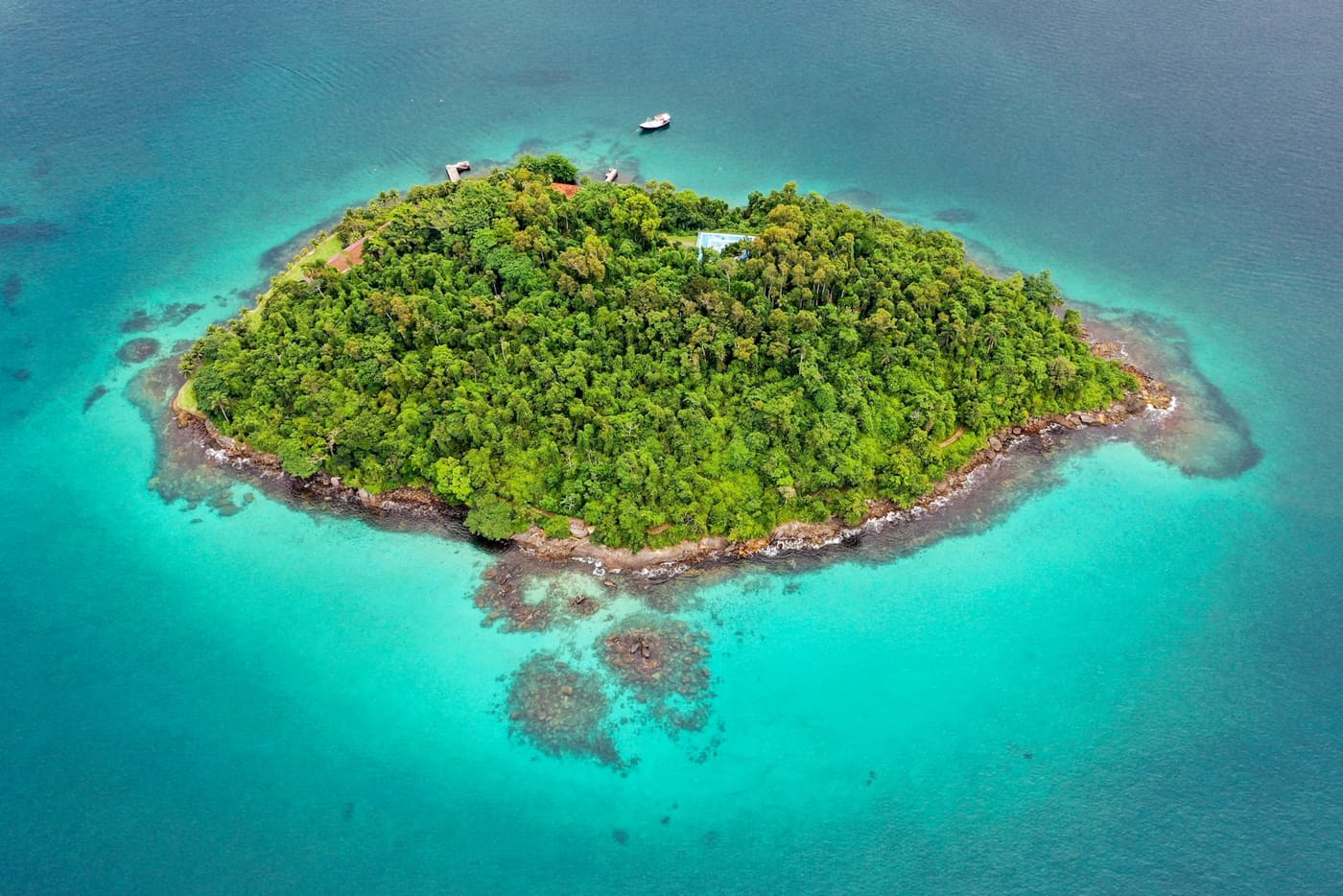 Ilha Grande bay: sheltered water and more than 30 mapped dive sites. Photo: Jaume Galofré, Unsplash
On the Rio de Janeiro side, Ilha Grande bay is the Costa Verde’s great diving park: more than 30 regular sites, almost all within the shelter of the bay, with depths that rarely pass 30 meters. Here too, history did the sport a favor.
The region’s best loved wreck is the Pinguino, a 50 meter freighter that caught fire in 1967 and ended up sunk in the Sítio Forte cove on the Ilha Grande shore. It rests between 7 and 20 meters, intact enough for photos and shallow enough for a freshly certified diver. At Praia Vermelha, the steamship Califórnia tells another story: the hull has come apart, but the boiler, paddle wheels and pistons are still visible on the bottom between 5 and 15 meters, like a museum taken to pieces. And near Bananal beach, a shallow rock ledge hides the bay’s most improbable surprise: a sunken helicopter that became an artificial reef, covered in life, in water only a few meters deep.
Departures leave from both Angra and Vila do Abraão, and the island’s operators organize everything from first dives in calm coves to two-tank runs through the wrecks. If your route already includes the island, diving slots neatly into one of the days; the full picture is in our guide to things to do in Ilha Grande.
Ubatuba: Ilha Anchieta
Between the two poles, Ubatuba holds the most organized site on the São Paulo north shore: Ilha Anchieta, a state park since 1977, reached by schooner from Saco da Ribeira. The wildlife repays the crossing: brain corals, sponges, turtles, rays, parrotfish and groupers, with Ponta Sul concentrating the best encounters. Keep the region’s most honest visibility figure in mind: it swings from 2 to 10 meters depending on current and rain, with rare 15 meter days. This is wildlife diving, not blue-water diving, and whoever understands that comes out satisfied. On land, the ruins of the old prison and the monitored Praia do Sul trail round out the day.
What about Paraty?
The honesty we owe you: Paraty’s bay is shallow, sheltered and sediment-bottomed, which makes it generous for surface snorkeling and weak for tanks. If you want a cylinder on your back, Angra, Ilhabela or Ubatuba solve it better; if you want to float with a mask in calm water, the Paraty region has some of the best spots on the corridor, starting with Ilha dos Meros, and the full route for that is in our ranking of the best tours in Paraty.
Freediving with a mask: what we do almost every day
Not every dive needs a tank. The most practiced form of diving on the Costa Verde is the simplest: mask, snorkel and lungs, in the coves where the sea settles and clears. This is the chapter we know from the inside, because the Albatroz expedition, our group’s schooner, carries snorkel kits and transparent kayaks on board and anchors precisely at the spots on this list that ask for no certification: Lagoa Azul early in the morning, Lagoa Verde late in the afternoon, Ilha dos Meros at breakfast time. There is a scene that repeats itself on every trip: someone who swore they did not like the sea spends forty minutes face down in the water, motionless, hypnotized by a school of fish. The complete map of this discipline, spot by spot and region by region, is in our guide to snorkeling on the Costa Verde, with the Ilha Grande detail in the island-specific guide and the duel of the two lagoons in Lagoa Azul or Lagoa Verde.
First dives: how to start without certification
The discovery dive is the trial run for anyone who has never gone under: a quick surface lesson, an instructor at your side the whole time and depths in the 6 to 9 meter range. On the Costa Verde it happens at the gentlest sites: Ilha das Cabras in Ilhabela, the area around the Aymoré, the calm coves of Ilha Grande bay and Anchieta. Three questions separate a good operator from a badly told adventure: how many students per instructor (two is great, four is the limit), whether the briefing happens calmly before the boat leaves, and whether the equipment shows visible maintenance. Prices vary by season and site; be suspicious of anything very cheap, because in this activity cheap usually comes with hurry.
When to dive
The calendar here inverts the beach tourist’s logic. Winter, from May to August, is the diver’s high season: the sea calms down, the rain thins out and the water hits its best visibility of the year, and it is also when the whales pass along the coast, which has already handed more than one lucky diver a memorable surface encounter. We make the case for that season, with numbers, in Ilhabela in winter. Summer delivers warmer water but pays for it in turbidity and crowds. And one rule holds all year: after heavy rain, the mountain rivers cloud the coastal sea for a day or two; if you can, wait. The month by month picture is in the best time to visit the Costa Verde.
The rules for anyone who enters the water
Underwater, the etiquette is short and non-negotiable: controlled buoyancy so you never scrape the bottom, hands off everything (coral breaks at a touch and takes decades to return), no feeding fish and no surfacing with a “souvenir”. A wreck is a historic site and an artificial reef at the same time; the rule is the same as in the forest: take only images. The full reasoning on how to visit this coast without wearing it out is in our guide to sustainable travel on the Costa Verde.
Where to start
If you are already certified, the order we suggest: the Pinguino plus one more site in Ilha Grande bay on one day, the Ilhabela wrecks at the other end of the trip, Anchieta if Ubatuba makes your route. If you have never gone under, start with a discovery dive at Ilha das Cabras or with a full day of mask and snorkel, which costs almost nothing and answers the most important question: whether or not the bottom of the sea is your place. Years of welcoming travelers tell us it is, and that the Costa Verde, with its green sea full of life and old iron, is a generous place to find that out. The rest of the trip builds itself around it, starting with the definitive guide to the Costa Verde.