
Perfect destinations for ocean lovers
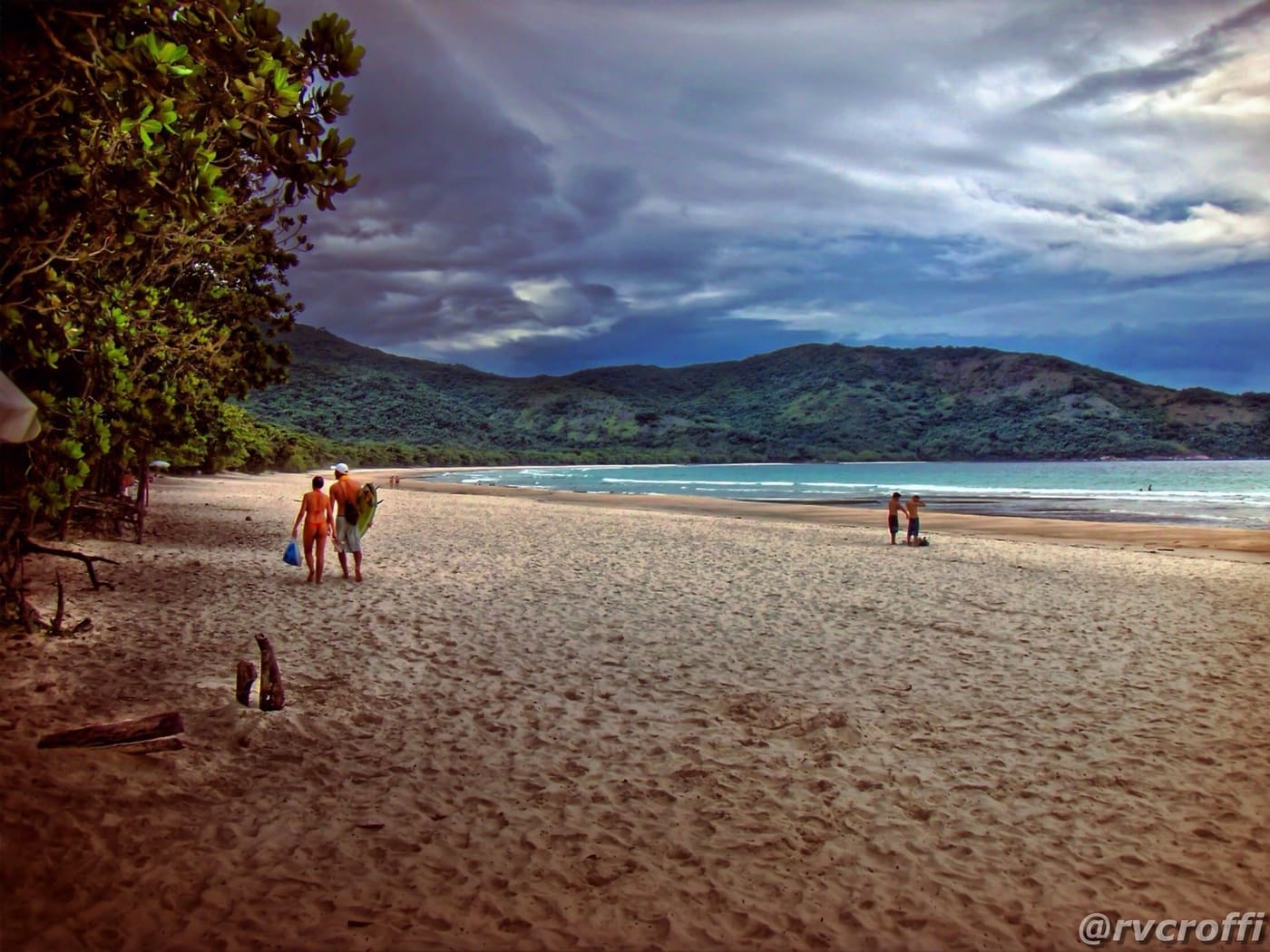
There is a type of traveler who picks a destination for the beach, and another, rarer one, who picks it for the sea. The difference seems small and is not. The first wants soft sand and clean water to spend the afternoon. The second wants wind, waves, a mask, a crossing, a horizon: for them, the beach is just the place where the sea touches land. This guide was written for the second type.
And it was written from the inside. The people behind this blog run a hostel in Ilhabela’s historic center, a schooner that spends the year anchoring in coves between Paraty and Ilha Grande and, in winter, whale watching departures. The Costa Verde’s sea is our workday. What this article organizes is its full menu for anyone who treats it as the destination: six different ways to live the same water, from the wind that fills a sail to the sleep rocked by the anchor. The region’s overview, with transport, costs and bases, is in the definitive guide to the Costa Verde.
For those who love wind: the Ilhabela channel
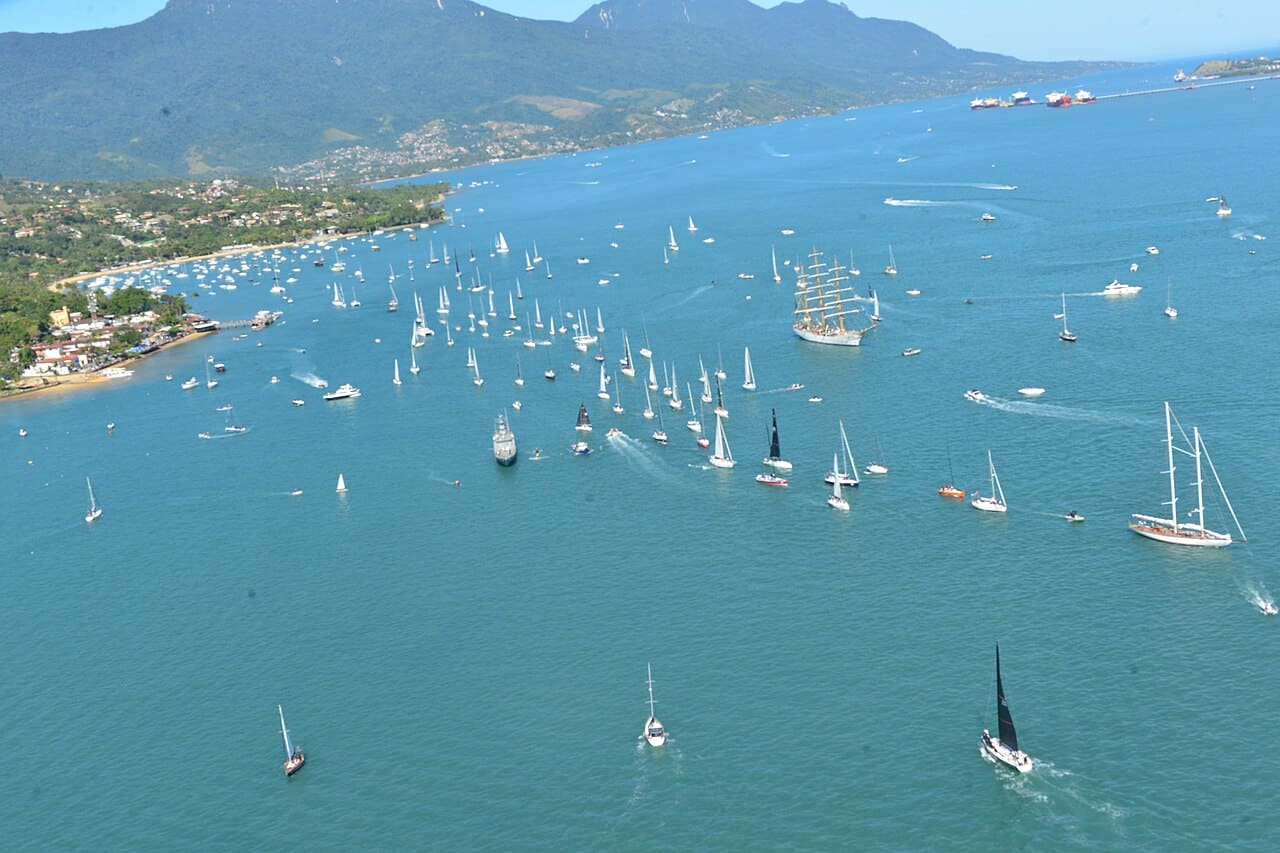 The São Sebastião channel during Sailing Week. Photo: Brazilian Navy, CC BY-SA 2.0, Wikimedia Commons
The São Sebastião channel is a corridor of protected water between the island and the mainland, about 2.4 km wide at its narrowest point, with a thermal wind that comes in almost every afternoon. That combination of sheltered sea and reliable wind is what made Ilhabela the sailing capital of Brazil: here the racecourse works all year, right on the doorstep, and a sailboat crossing the channel is ordinary-day scenery.
The peak of the calendar is the International Sailing Week, the largest regatta in Latin America, which in 2026 runs from July 24 to August 1 and puts more than 100 boats on the water. And here is the detail that changes the plan for non-sailors: you watch it for free, from the Vila’s waterfront promenade, with the masts passing in front of the mainland mountains. At night the crews come down to the bars and the island becomes a real port, full of people talking wind and nautical miles. The full calendar is in the guide to the best time to visit Ilhabela.
The honest caveat: actually sailing, without your own boat or a sailing friend, means hiring a skippered outing, and that costs a few hundred reais per session. If the budget does not stretch, the regatta watched from the promenade delivers a good share of the thrill for zero reais.
For those who want waves: Maresias and Itamambuca
The Costa Verde’s sea fools the unsuspecting surfer: since almost everything here happens inside bays and coves, the general rule is gentle water. Real waves have specific addresses, and there are two. The first is Maresias, in São Sebastião, with 5 km of open sea and Canto do Moreira, the break that formed two-time world champion Gabriel Medina. The second is Ubatuba, “Capital of Surf” under state law since 2007, where Itamambuca hosts national contest stages and the municipality’s more than 100 beaches guarantee a peak for every level of paddling.
The season tip comes from meteorology: autumn and winter bring the year’s most consistent south swells, with clearer water and fewer people fighting for the set. In summer the sea is more variable and the beach shares space with the crowd. Both towns appear in our ranking of Costa Verde beaches for reasons beyond the waves, but it is the waves that put them in this guide.
For those who prefer to float: the Ilha Grande lagoons and Trindade’s aquarium
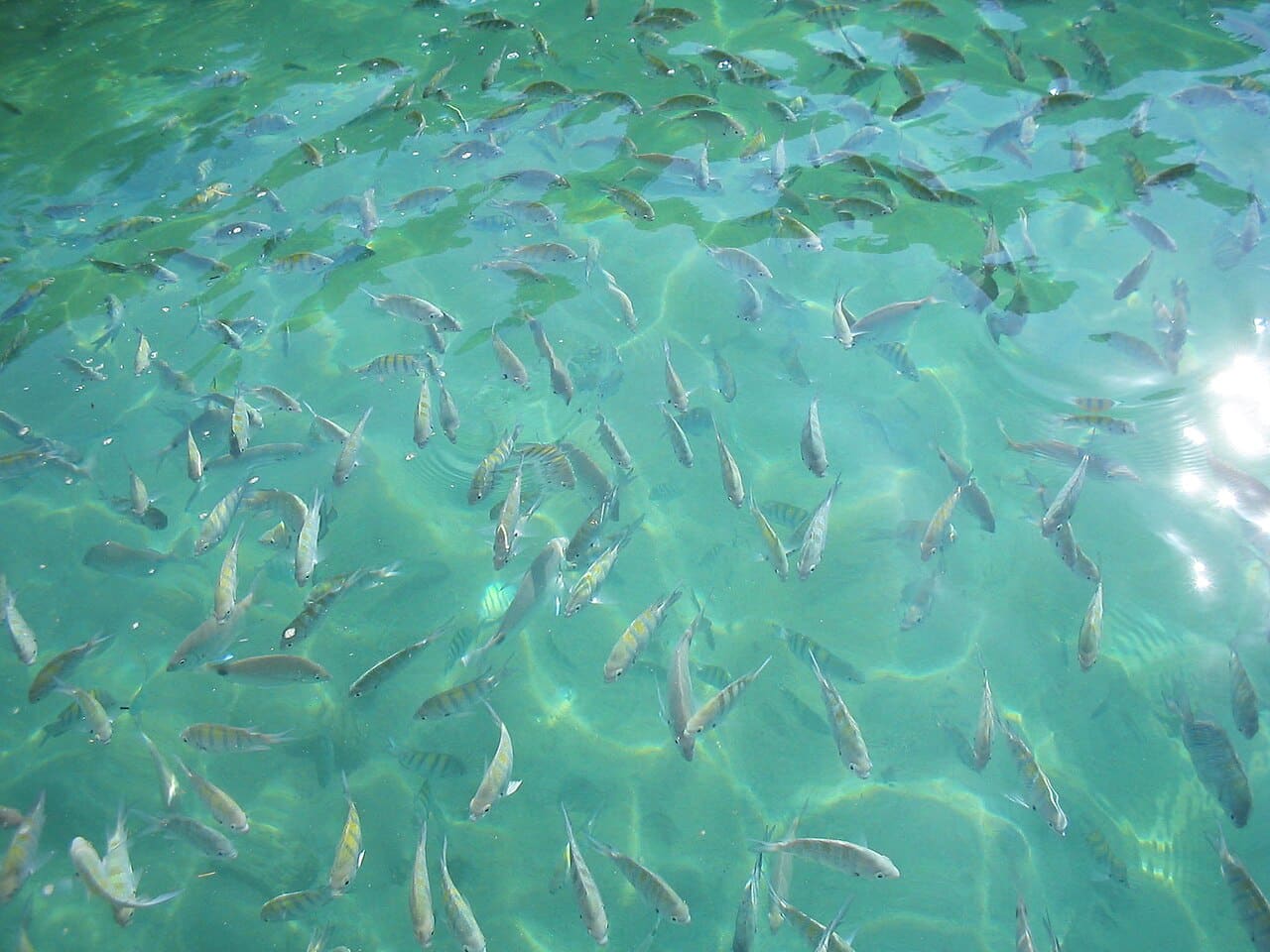 Below the surface of Lagoa Verde, Ilha Grande. Photo: Ronaldo Leonardo, CC BY-SA 3.0, Wikimedia Commons
If your way of loving the sea is looking down, the region’s best set of floating spots is on the protected coast of Ilha Grande. Lagoa Azul is the postcard, with sergeant majors by the dozen and a bright bottom; Lagoa Verde, more tucked away, keeps seahorses by the rocks and turtles with good frequency. The honest comparison between the two, with the timings to escape the packed schooners, is in Lagoa Azul or Lagoa Verde, and the full map of spots, from easy to secluded, in the guide to snorkeling in Ilha Grande.
On the São Paulo side of the conversation, the Cachadaço natural pool in Trindade is an aquarium protected by granite blocks where the water rarely passes your waist. You reach it by a 30 minute trail, and the rule holds for all these spots: go early in the morning, before the excursion boats, and bring your own mask. It is the best R$ 100 investment of your trip.
For those who love crossings: the sea as a road
On the Costa Verde, the boat is public transport. The ferry from Mangaratiba or Angra to Vila do Abraão costs R$ 20.50; the flex boat from Conceição de Jacareí makes the same crossing in 20 to 25 minutes; the São Sebastião ferry to Ilhabela is free for anyone crossing on foot. For an ocean lover, that means something good: the whole trip can be drawn on water, hopping island to island with your backpack on your lap and the wind on your face, no steering wheel in between.
The full design of that logic is in the itinerary that joins Ilhabela, Paraty and Ilha Grande in one trip; the step by step of each crossing, with 2026 prices and timetables, in how to get to Ilha Grande and the guide to the Costa Verde without a car. One piece of advice from people who board every week: sit outside, even in winter. The crossing is part of the destination, not a toll.
For those waiting on giants: the winter of the whales
Between May 16 and August 16, humpback whales move up the Atlantic toward the nurseries of Brazil’s Northeast and pass along the Ilhabela coast, with sightings peaking in June and July. It is not a stroke of luck: it is migration, it happens every year. On a clear day you can spot a blow from shore; from a boat, the thing changes in scale and in heart rate.
During the season we run our own whale watching departures: R$ 320 per person, 3h30 at sea on a rigid inflatable leaving from the Pier da Vila, in the historic center, with an operation certified by the Whale Friendly Seal. And the warning we give before any booking: sightings are not guaranteed, because whales do not follow scripts. What is guaranteed is the open sea of the archipelago and a crew that knows where to look. The full case for the cold season is in Ilhabela in winter.
The highest degree: sleeping on the sea
Every item on this list has a closing time. The wind drops, the wave shuts down, the excursion boat returns to the pier at 5 pm and you have dinner on land, looking at the water from a distance. There is one step above, and we argue it is the final step for anyone who loves the sea: not going back. Sleeping on board changes your relationship with the sea because it eliminates the daily goodbye. The swell becomes sleep, the hatch becomes an alarm clock, coffee is drunk on the bow in a cove no road reaches.
The way we know from the inside is the Albatroz expedition, our group’s 23 meter schooner, which leaves Paraty on routes of 2 to 5 nights with a chef on board, a transparent kayak and snorkel kit for everyone. The scene that sums up the argument happens on the morning of the third day of the Ilha Grande route: the boat wakes up anchored at Praia do Pouso and you cross the 20 minute trail to Lopes Mendes before the day-trip schooners arrive. The most famous beach in the country, nearly empty, and your bed a hundred meters from the sand. The onboard videos and upcoming departures live on the Albatroz Instagram.
How to choose your sea
If you have a week, do not choose: stack. The surfer catches the autumn swells, the sailor aims for late July, the floater carries a mask in the backpack all year and whoever wants whales locks the trip between June and July. The seasons change this region’s sea in ways we detail in the best time to visit the Costa Verde, and every season has a sea at its best for some type of traveler.
What does not change is the nature of the place: a 294 km corridor where the mountains push the road to the water’s edge and the sea takes part in everything, from transport to dinner. An ocean lover needs no further argument. They need a date, a soft backpack and the decision to spend more time in the water than looking at it.