
Ubatuba or Ilhabela?
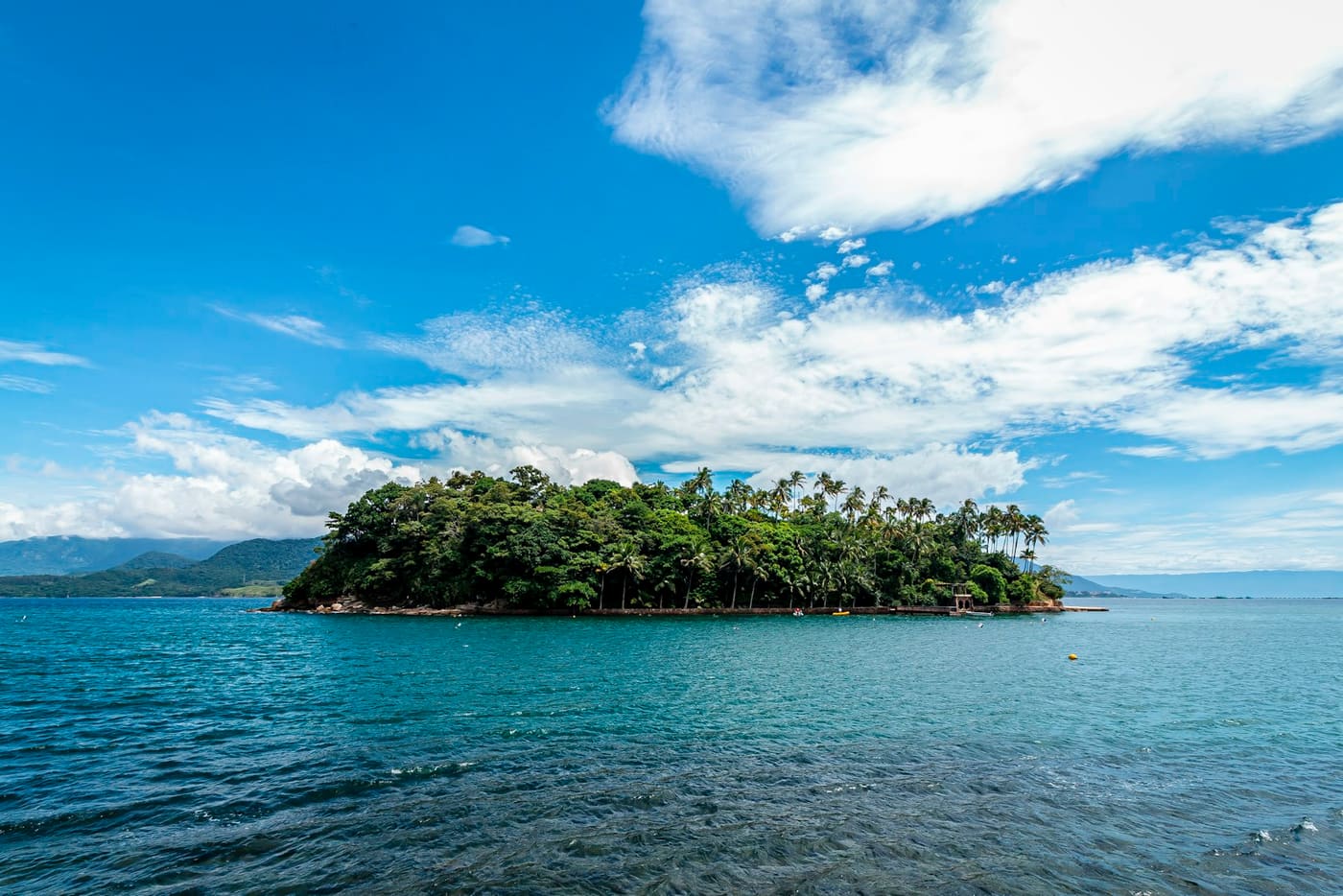
Ubatuba and Ilhabela are neighbors on São Paulo’s north coast, separated by an hour of the Rio-Santos highway and a channel crossed by a 20 minute ferry, and they have been fighting over the same São Paulo weekend for decades. We enter this conversation with our bias declared: the people writing this live in Ilhabela, where our group’s hostel has operated in the historic center since 2016, and cross Ubatuba all year long, because it is the road to everything we do on the Rio side of the Costa Verde. We sleep in one and know the other by road, beach and borrowed surfboard.
And precisely because of that, this comparison will not be a cheering section. Ubatuba solves trips that Ilhabela does not, and vice versa. The difference between them fits in one image: Ubatuba is the coast in extension, Ilhabela is the coast in depth.
The quick answer
Ubatuba has more than 100 beaches spread along 106 km of coastline, almost all reachable by car, and has been the official Capital of Surf under state law since 2007. Ilhabela has 42 beaches on an island that is almost entirely state park, where the best experiences are earned by trail, 4x4 or boat. Family with a car, board on the rack and the urge to change beaches every day: Ubatuba. Traveler without a car, into trails, waterfalls and social evenings: Ilhabela. In winter, with the humpbacks crossing the channel, the scale tips toward the island.
The duel, criterion by criterion
Beaches
In quantity and access, Ubatuba is unbeatable on the São Paulo coast: more than 100 beaches along 106 km, from urban bustle to the near-deserted coves of the northern stretch, with the car doing the itinerary. Itamambuca hosts national surf contests, and the classic boat trip leaves Saco da Ribeira for Ilha Anchieta, the state park island with the ruins of an old prison.
Ilhabela plays a different game: the channel beaches are calm and practical, and the monumental ones demand effort, like Castelhanos, the heart-shaped bay at the end of 17 km of dirt road that only a 4x4 handles, and Bonete, which The Guardian once listed among the ten most beautiful beaches in Brazil, at the end of a 16 km trail. The full ranking is in the most beautiful beaches in Ilhabela.
Winner: Ubatuba, on the combination of access, variety and surf. Ilhabela takes the emotional tiebreaker: a beach you earn stays with you longer than a beach you park at.
Trails
Here the island pulls away. Most of Ilhabela’s territory is closed state park, and that yields the Pico do Baepi trail (1,048 meters, with an accredited monitor and the whole channel down below), Água Branca (self-guided, free, with five natural river pools) and the Bonete crossing, mapped in the best hikes in Ilhabela. Add the dozens of waterfalls that charge no entry and the package is complete. Ubatuba has good walks in the Serra do Mar and on Ilha Anchieta, but no network with the same weight in a trip.
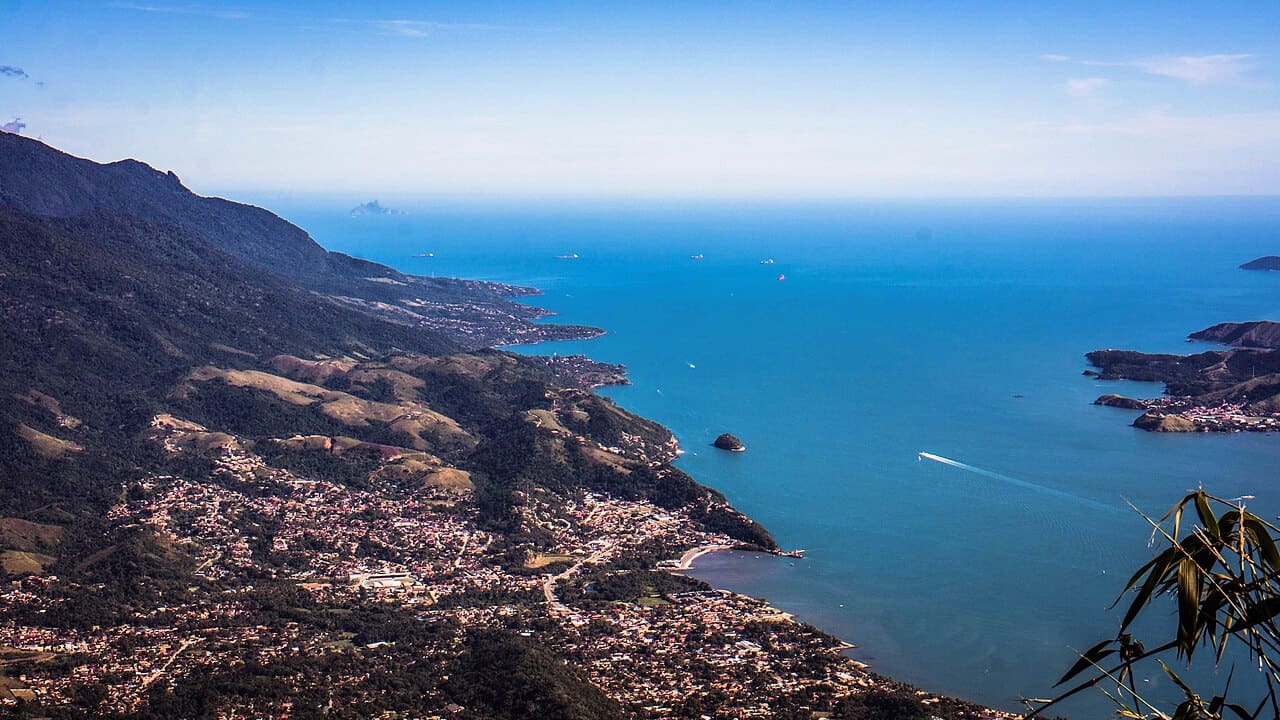 The channel seen from Pico do Baepi, Ilhabela’s signature trail. Photo: Igorh84, CC BY-SA 4.0, Wikimedia Commons
Winner: Ilhabela, comfortably.
Infrastructure
Ubatuba is a proper city, bigger than its neighbor: its own bus station with direct buses from São Paulo, full commerce, services, parking at most beaches. It has also been home to a base of Projeto Tamar, Brazil’s sea turtle conservation project, since 1991, where you can stand next to turtles of up to 130 kg; in 2026, full admission costs R$ 44 and the center opens every day from 10 am to 5 pm. For a trip with kids, that package weighs.
Ilhabela is smaller and more concentrated: life runs along the channel axis, stitched together by a R$ 10 municipal bus, with the Vila gathering the promenade, restaurants and nightlife. High charm, medium convenience: without a car you depend on the bus and your legs, which the guide to Ilhabela without a car solves.
Winner: Ubatuba, on the cold criterion of city services and logistics. Ilhabela wins on atmosphere, but atmosphere is a different criterion.
Cost
The two destinations cost about the same day to day, with set-menu lunches around R$ 30 and lodging for every budget. The differences live in transport: by bus from São Paulo, Ubatuba costs R$ 126 to 142 and Ilhabela R$ 101 to 123 plus the free pedestrian ferry; by car, Ubatuba has no crossing and Ilhabela pays R$ 19 for the ferry on weekdays (R$ 28.50 on weekends). In Ilhabela, the big excursions are expensive on purpose, because they are park operations: the full-day 4x4 costs R$ 110 to 150 per person. The island’s full spreadsheet is in Ilhabela travel costs.
Winner: tie. By car, Ubatuba is marginally simpler and cheaper; by bus, Ilhabela.
Access
From São Paulo, both sit about 4 hours away on the Tamoios highway. The difference is the ending: in Ubatuba you step out of the car onto the beach; in Ilhabela there is the ferry, 20 minutes of channel that on a normal day are a free boat ride and on a holiday become a line that lasts hours (the Hora Marcada booking system solves it, as the guide to where is Ilhabela and how to get there explains).
Winner: Ubatuba, on pure practicality. With a sincere defense of the loser: the crossing is a decompression chamber, and arriving on an island by ferry is part of what you are buying.
Who each one is for
Ubatuba is for people who travel by car and want route freedom, for surfers of any level, for families with small children (beaches with parking and Tamar as the cloudy-day plan) and for people who like scale: there is always a new beach to find tomorrow.
Ilhabela is for people traveling without a car (the combo of bus, free ferry and R$ 10 municipal line is rare on this coast), for hikers and waterfall hunters, for anyone who wants live music and a long table at night, and for anyone visiting the north coast between May and August, when winter turns into whale season.
The summary table
| Criterion | Winner | Margin |
|---|---|---|
| Beaches | Ubatuba | medium |
| Trails | Ilhabela | wide |
| Infrastructure | Ubatuba | medium |
| Cost | tie | changes with transport |
| Access | Ubatuba | narrow |
| Winter | Ilhabela | humpback season |
The mistake we see every summer
Trying both on the same long weekend. On paper it looks easy, because one hour of road separates the neighbors; in practice, holidays double the Rio-Santos travel times, stretch the ferry line past two hours without a booking and turn the destination swap into a full moving day. If your window is three or four days, pick one and live it completely. The pair works on trips of five days or more, outside holidays, with nights booked on both sides in advance, because the north coast genuinely sells out on peak dates.
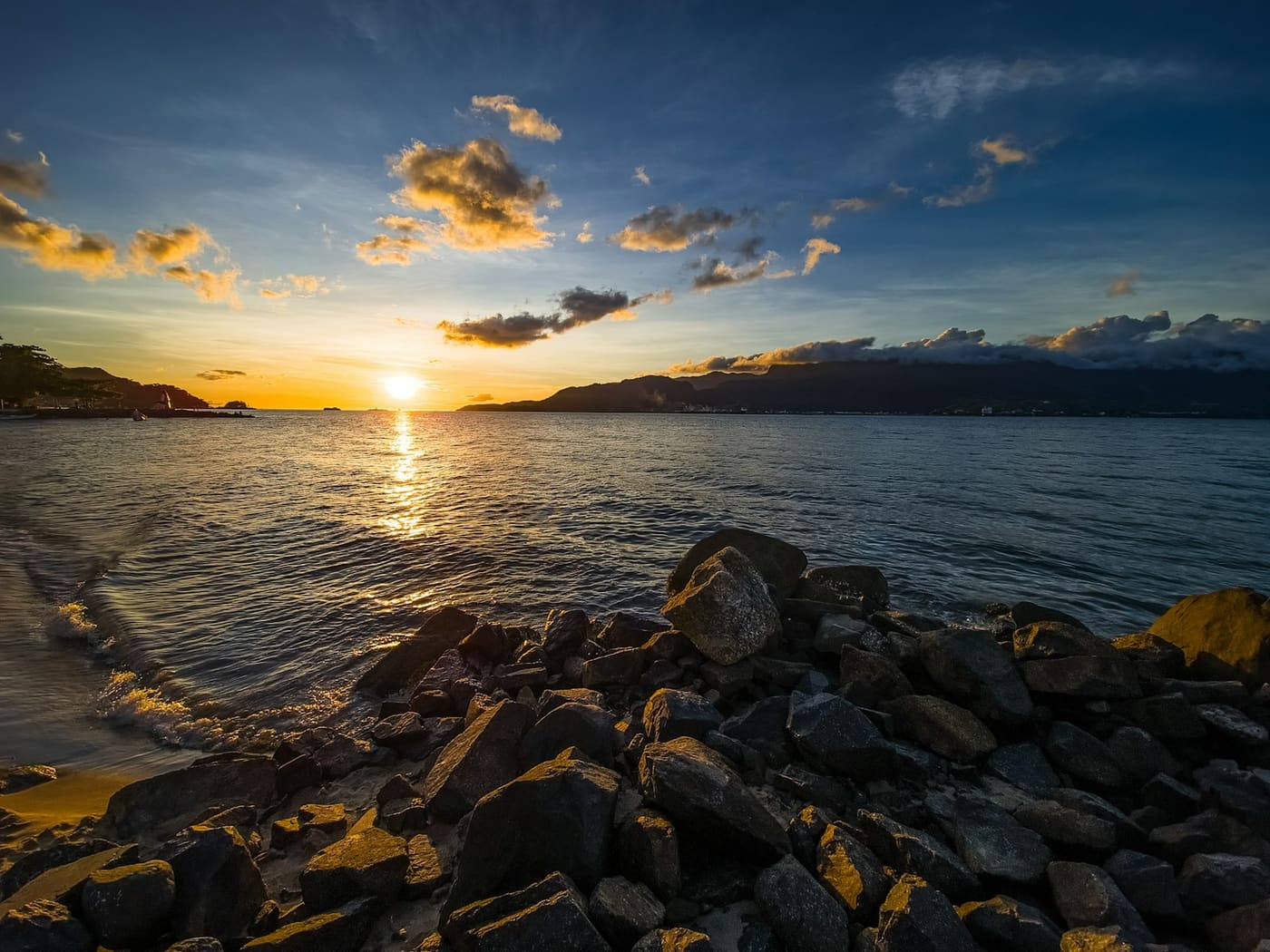 End of day on the São Sebastião channel: the free show on the island side. Photo: Vitor Camilo, Unsplash
The detail that breaks the tie in winter
From May 16 to August 16, humpback whales move up the coast toward Brazil’s Northeast and cross the São Sebastião channel, with sightings peaking in June and July. We run our own whale watching departures from the Pier da Vila, in Ilhabela’s historic center: R$ 320 per person, 3h30 on a flexboat, an operation certified with the Whale Friendly seal, and the usual honesty, because sightings are never guaranteed. Ubatuba also sees spouts from shore in that season, but the structured on-the-water experience is the island’s trump card.
And if your scorecard ended on Ilhabela, the transparency of the people writing: our house is Hostel da Vila, an eco lodge in the historic center, on the channel side, with a pool heated to 32°C all year and a schedule that changes every week; the agenda goes out on our Instagram.
The verdict
Ubatuba wins the horizontal trip: more beaches, more car, more city. Ilhabela wins the vertical one: more trail, more waterfall, more ritual. It is not a choice between better and worse, it is between extension and depth, and those of us who live here cross over without guilt whenever a surfboard is involved.
The best news is that the choice is only mandatory on a weekend: with four or five days, the neighbors link up along the same road, as the definitive guide to the Costa Verde shows. The next step is a single one: pick your season with the guide to the best time to visit Ilhabela and leave the rest to the coast.