
The best places to see marine wildlife on the Costa Verde
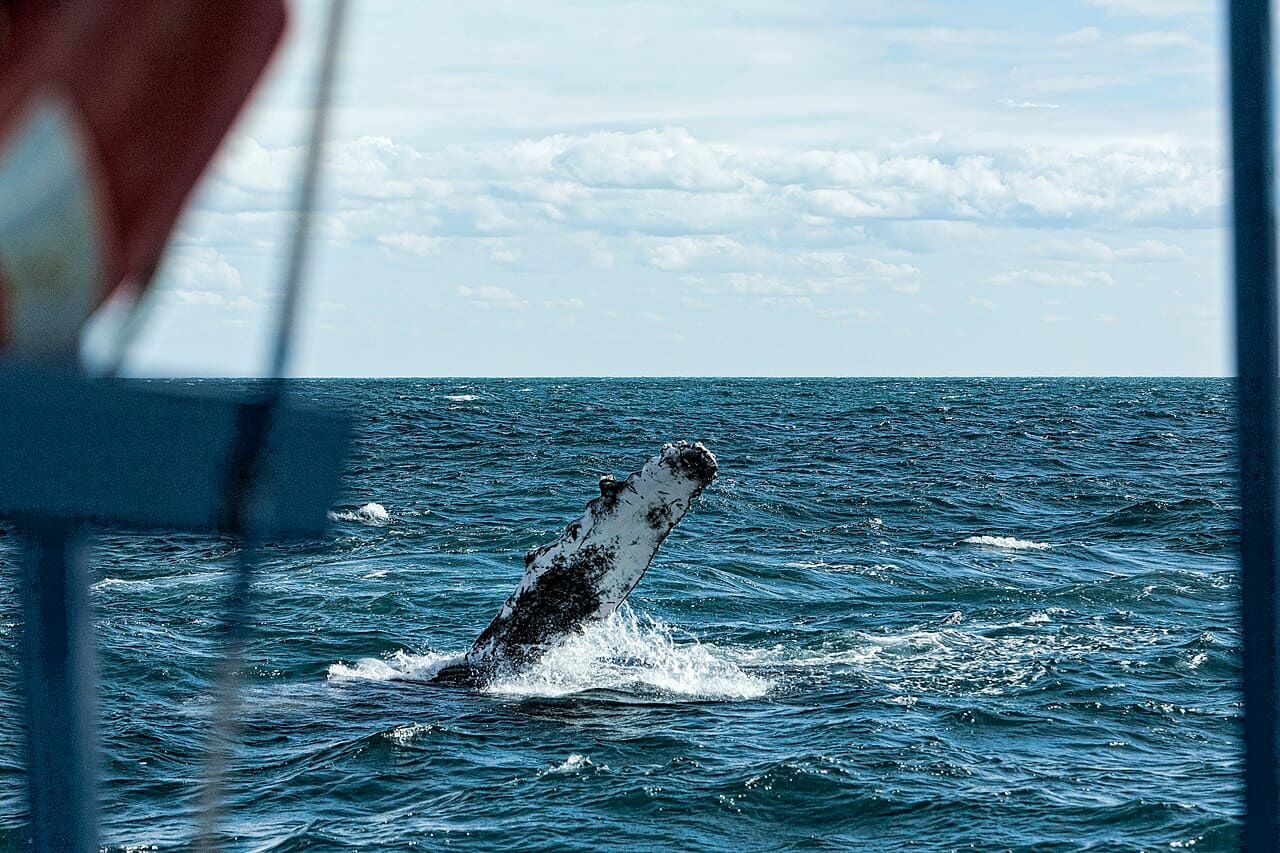
The Costa Verde’s sea has a population that never makes the postcard. Humpbacks passing along the coast in winter, dolphins that live here all year, turtles grazing in natural pools, seahorses in disguise by the rocks. We work this sea every day, between an island, a schooner and an annual season of whale departures, and can say it with confidence: the wildlife is the region’s most underrated show.
This guide maps where each encounter really happens, with season, price and honest probability. Because animals do not follow scripts, and the traveler who understands that goes home with better stories than anything promised in an ad.
Whales off Ilhabela: May 16 to August 16
The Costa Verde’s biggest marine wildlife event has a date: between May 16 and August 16, humpback whales move up the Atlantic toward the nurseries of Brazil’s Northeast and pass along the Ilhabela coast, with sightings peaking in June and July. It is migration, not luck: it happens every year, and it turns the archipelago’s sea into a highway of 40 ton giants. On a clear day you can see blows and tails from shore. From a boat, the scale changes.
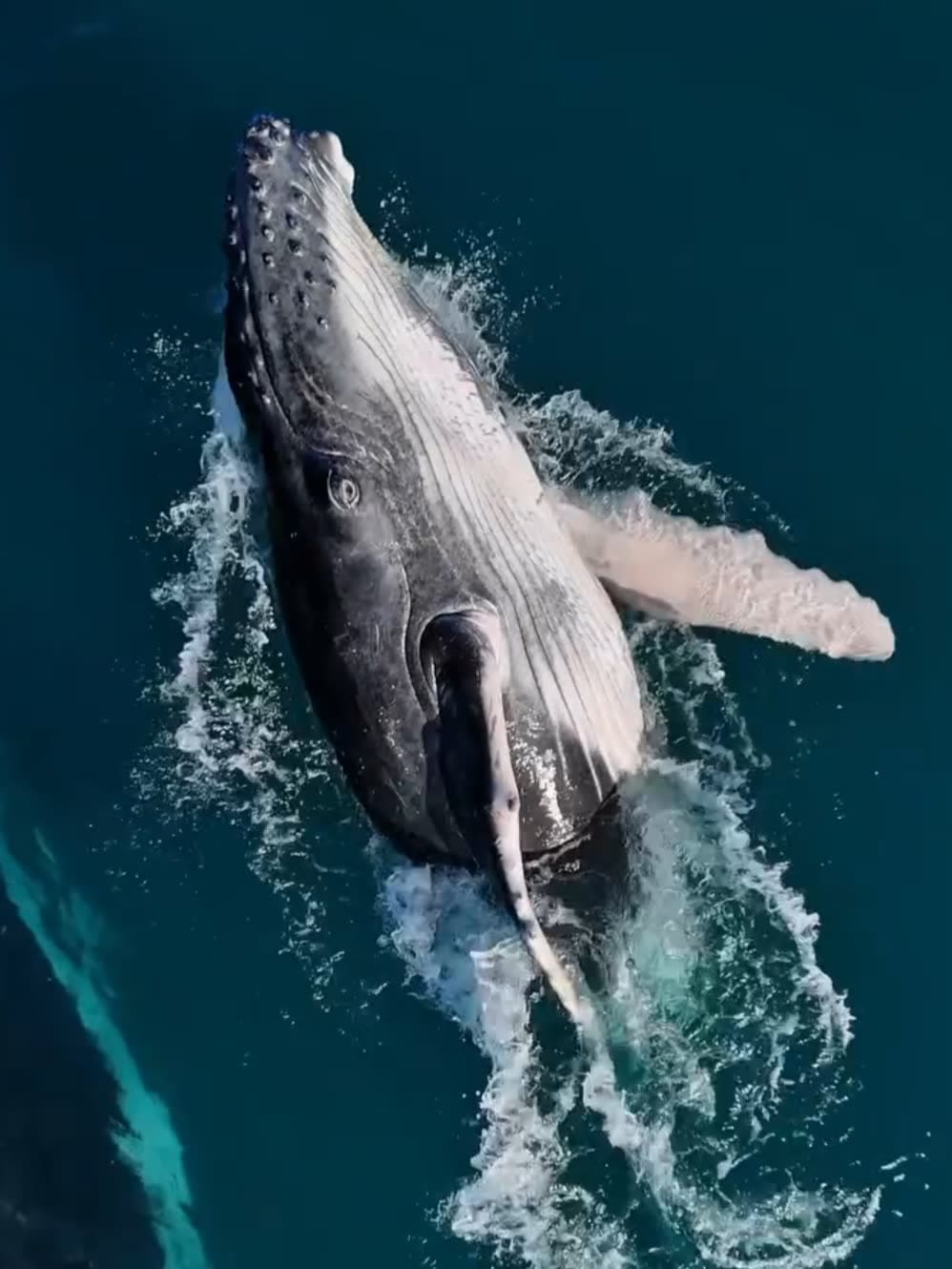 Humpback photographed on one of our departures in Ilhabela. Photo: Hostel da Vila Group collection
During the season we run our own whale watching departures: R$ 320 per person, 3h30 at sea on a rigid inflatable, leaving from the Pier da Vila, in the historic center, with children accepted from age 6. The operation follows the Whale Friendly Seal, which means regulated distance and conduct, because the show is theirs. And the warning we insist on giving before any booking: sightings are not guaranteed. What is guaranteed is the open sea of the ocean side, the islands seen from outside and a crew that knows where to look. The same season brings right whales, minkes, Bryde’s whales and, now and then, a passing whale shark. The full case for the season is in Ilhabela in winter.
A scheduling tip we repeat constantly: book the departure for the first possible morning of your stay, not the last. If the wind cancels the day, there is room to rebook.
Dolphins: the year-round residents
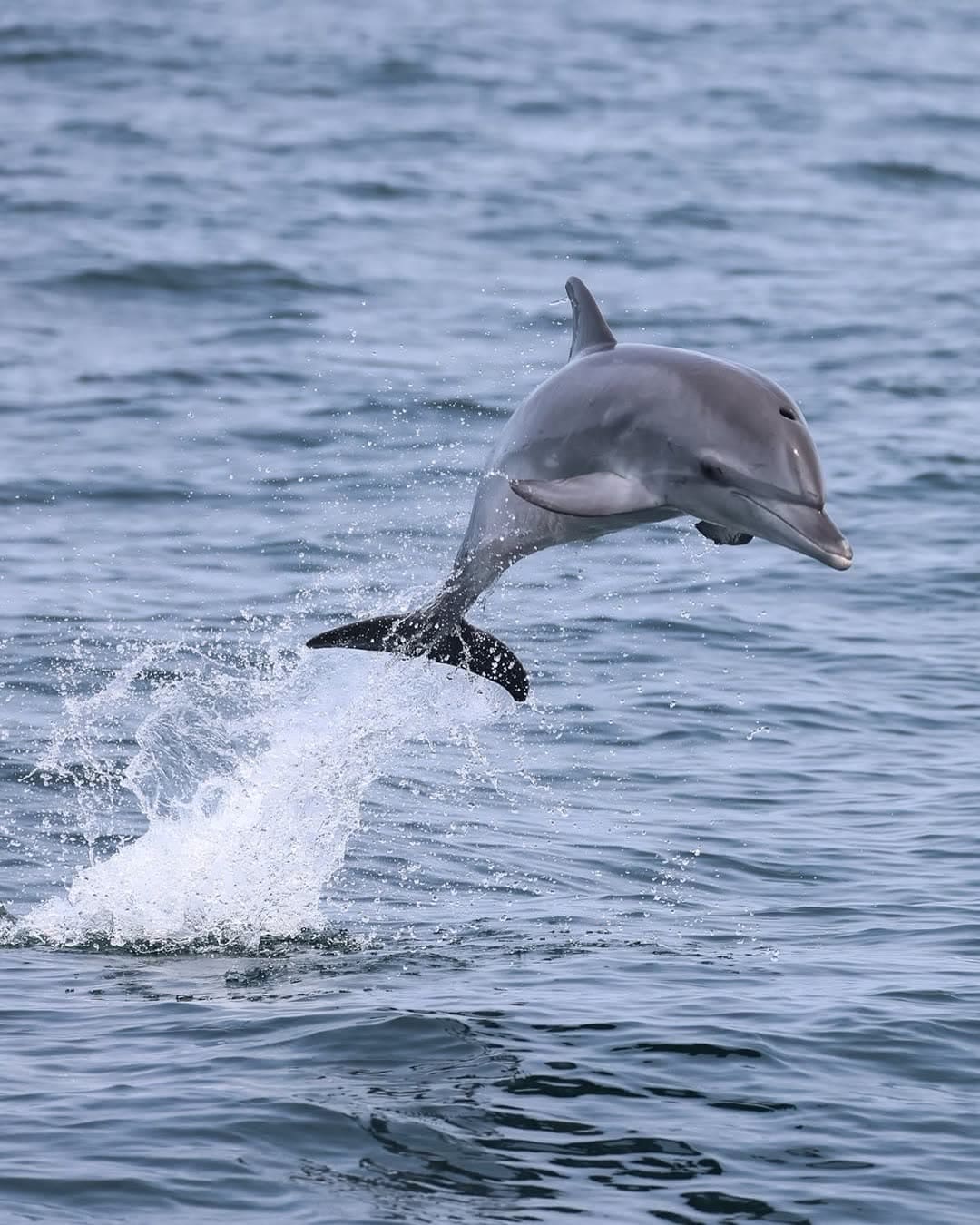 Dolphin photographed on one of our departures in Ilhabela. Photo: Hostel da Vila Group collection
While the whales have a season, the dolphins have residency. Groups appear all year along the São Paulo north shore and in Ilha Grande bay, escorting boats for sport and hunting in shallow water. On our winter departures they are the most frequent supporting act, and sometimes they steal the scene: a group surfing the bow wake holds the whole boat’s attention for ten minutes.
There is no guaranteed “dolphin spot”, and distrust anyone selling one. What exists is probability: whoever spends more hours at sea, on a ferry crossing, a schooner or a speedboat, ends up seeing them. It is one more argument for treating the boat as part of the trip rather than a transfer, a logic we detail in the guide to seeing Ilhabela, Paraty and Ilha Grande in one trip and in the overview of Costa Verde boat tours.
An observation tip the crew teaches on board: look for movement, not for the animal. A seabird diving in circles usually gives away a cornered school of fish, and where a school is being worked, dolphins show up often. Once you learn to read that sign, no crossing is ever monotonous again.
Turtles: Ubatuba and Ilha Anchieta
For a guaranteed turtle encounter, the address is Ubatuba, home since 1991 to a base of Projeto Tamar, Brazil’s sea turtle conservation project, with visitation tanks where animals of up to 130 kg live. It is the right program for a rainy day and the best marine biology lesson in the region, especially for anyone traveling with children.
To see turtles in the open sea, the classic is the schooner trip from Saco da Ribeira to Ilha Anchieta, a state park with a trail accompanied by an environmental monitor and green freediving water. And in Ilha Grande bay, they appear regularly at Lagoa Verde and Caxadaço, preferably for whoever arrives early, before the parade of schooners. The spots are mapped in the guide to snorkeling in Ilha Grande.
The fish of the Ilha Grande lagoons
The region’s entry-level aquarium is the pair of lagoons on Ilha Grande’s protected coast. At Lagoa Azul, a shallow pool between islets, sergeant majors surround anyone who enters the water and sea stars dot the bright bottom. At Lagoa Verde, less visited, the list levels up: greenish corals, seahorses tucked against the rocks (search slowly, they disguise themselves rather than flee) and the turtles already mentioned. The honest comparison between the two, with the right time of day for each, is in Lagoa Azul or Lagoa Verde.
On the São Paulo coast, the Cachadaço natural pool in Trindade delivers the same effect with short-trail logistics: water that rarely passes your waist, fish at your shins and full protection from the open sea. Go in the morning, bring your own mask and never feed the fish, however hard the sergeant majors lobby.
If you want to level up the underwater exploring, two paths are mapped in this same section of the blog: the guide to snorkeling on the Costa Verde, which organizes the floating spots of the whole region, and the one on diving on the Costa Verde, for anyone who wants tanks, wrecks and a first dive. The wildlife is the same; what changes is the depth of the conversation.
Watching ethics, without decoration
Marine wildlife is not a contracted attraction, and the difference between watching and disturbing fits in half a dozen rules we follow and enforce:
- Distance is rule number one. The Brazilian cetacean watching regulation requires keeping at least 100 meters from whales and dolphins, never cutting across an animal’s path and never chasing it. Whoever respects it tends to be rewarded: a relaxed animal stays at the surface longer.
- Engine in neutral near an animal. A spinning propeller is the biggest real risk to a distracted whale or a turtle at the surface.
- Limited time. If the animal changed behavior, dived repeatedly or moved away, the message was delivered.
- In the water: do not touch turtles, coral or seahorses, and put on sunscreen half an hour before entering, never at the water’s edge, because the film it sheds on the surface attacks the whole rocky shore. A UV shirt solves it better.
- Keep drones away from whales with calves. The noise stresses exactly who the season protects.
A nuance that surprises first-time passengers: the 100 meter rule applies to the boat, not to the animal. If the whale decides to approach with the engine in neutral, and curious humpbacks do that, the encounter is legitimate and tends to be the best moment of the season. The difference between chasing and being visited is all the difference.
If you are booking a tour, ask two things before paying: what the distance policy is and whether the operation has a conduct certification. A vague answer is an answer.
When to go and where to start
The wildlife calendar favors winter, and that is good news in disguise: between May and August the sea clears, the lagoons empty, the whales pass and prices drop, as the guide to the best time to visit the Costa Verde shows. Summer gives back warmer water for snorkeling and keeps dolphins and turtles on stage, with more people sharing the view.
To build the trip around the animals, the formula we suggest: a base in Ilhabela during whale season, with the watching departure on the first window of good weather, a day of Tamar and Ilha Anchieta in Ubatuba along the way, and the Ilha Grande lagoons for the mask phase, slotted into the broader plan of things to do in Ilha Grande. The backstage of our seasons, whales included, shows up on our Instagram.
The last thing we tell everyone who boards with us: the sea here is not an aquarium, it is home. The humpback you might see is in the middle of a journey of thousands of kilometers; the dolphin that surfed the bow chose to appear. When the encounter happens on those terms, without guarantee and without encirclement, it is worth more. That is why we insist on the honest word: we do not promise animals. We promise the sea where they live, and it never disappoints.