
How staying aboard a boat works
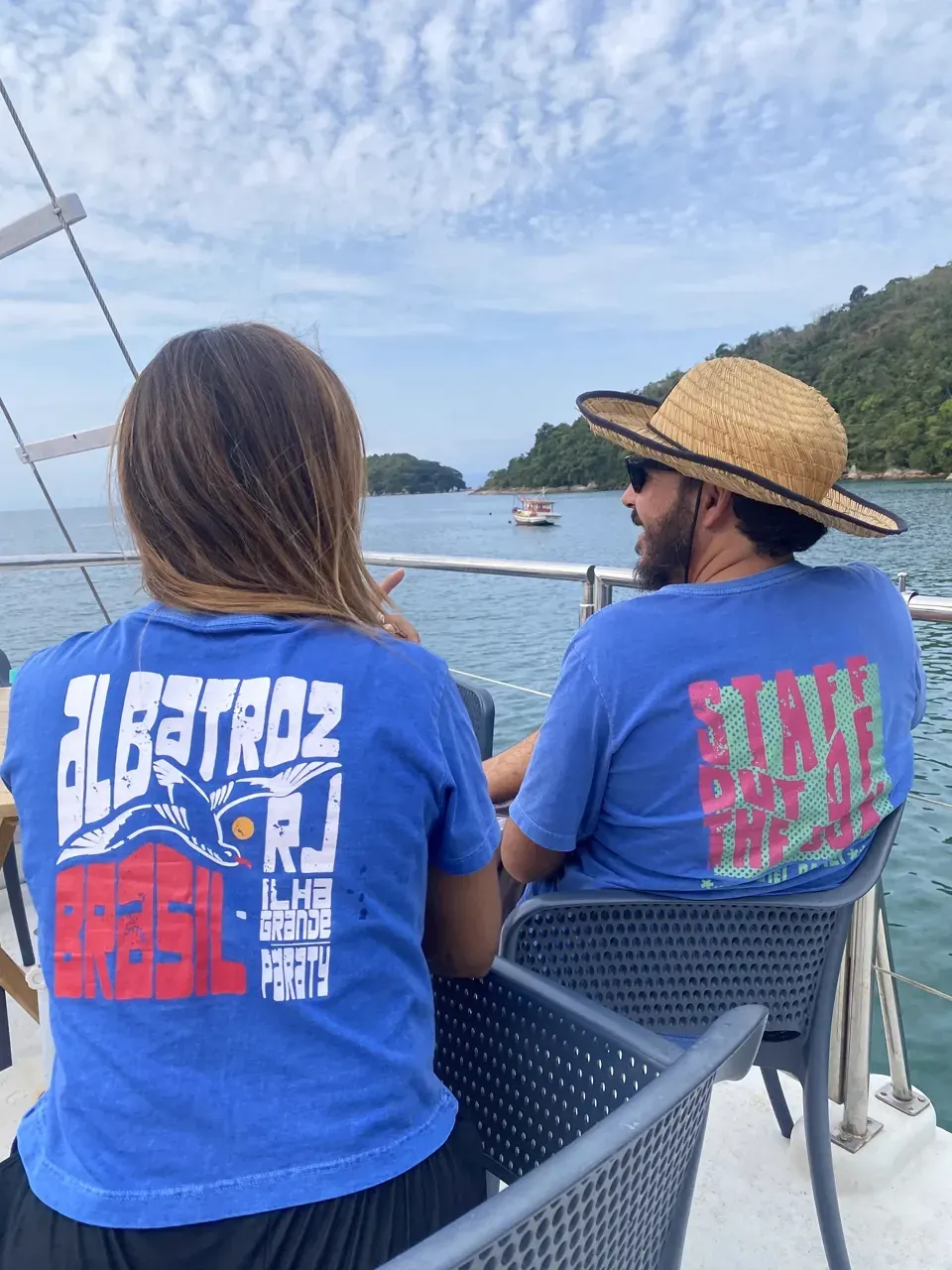
When we say “boat hostel”, the most common reaction is a pause. People know hotels, they know hostels, they know schooner day tours; the idea that a boat can be the lodging itself, with a made bed, a chef and common areas, still sounds made up. And it is, in part: in Brazil this format barely exists. We operate one of them, the Albatroz, part of the Hostel da Vila group, sailing out of Paraty, and this article explains the category for anyone hearing about it for the first time. What it means to sleep on a boat that does not return to the dock, what changes compared with a hostel on land, and the infrastructure questions everyone asks with a little embarrassment (power? hot water? internet?).
Where the idea comes from
Abroad, the concept has an established name: liveaboard. Divers sleep for weeks on boats in the Red Sea and the Galápagos; in Croatia, island-to-island routes aboard sailboats are a mature industry. What barely existed was the version with hostel spirit: an accessible rate, a communal deck, a long table, people with backpacks. That is the gap the Albatroz went to fill on the Costa Verde, between Paraty and Ilha Grande, the most protected and destination-dense stretch of sea on the Brazilian coast. The full context of the region is in our definitive guide to the Costa Verde.
The hostel logic transfers almost whole: on land, you trade a large private room for a good bed in a shared space and gain company and price in return. On board, same thing. The difference is that the common area floats and the living room window changes scenery two or three times a day.
Cabin or hammock
Every stay aboard comes down to this choice, which is the nautical version of the classic “private room or dorm”.
The cabin is the private option: on the Albatroz there are 10, double or twin, with air conditioning, blackout curtains and USB by the pillow. It is small in the way of boats, with low headroom and a tight locker, and it does its job as a sleeping cave: dark, cool, quiet. Nobody spends the day inside it, for the same reason nobody spends the day in the room of a good hostel: life is outside.
The hammock is the deck dormitory: hung in the covered area, with the breeze for a blanket and the sunrise for an alarm clock. It is the entry rate (from R$ 990 on the 2 night departure, at 2026 prices) and it has a loyal following that would not trade it for any cabin. The honest criterion: light sleepers who get cold easily do better in a cabin; people who can sleep anywhere and want the rawest version of the experience love the hammock.
What changes compared with a hostel on land
Check-in is a boarding. It happens once (on the Albatroz, from 6 pm at Marina Píer 46 in Paraty, with the first night docked and free for the historic center) and from then on the lodging travels with you. It is the inversion that defines the category: at a land hostel, you leave the base to see the places; aboard, the base comes along.
There is no “going out for dinner”. The galley takes over full board from day two, and there is one table, long and communal. This changes the social dynamics more than it seems: on land, the group scatters across different restaurants and reunites by chance; aboard, three meals a day bring everyone together, and by the second breakfast there are nicknames going around the table.
The crew is the house team. Four people for 24 guests: captain, chef, deckhand, support. It is the hostel’s front desk, kitchen and maintenance condensed into people who also point out the moon, rig the squid rod and know which cove sleeps best in a southerly wind.
The night has no club to leave for. At a land hostel the night stretches through bars and comes home late; aboard, it is the sky, squid fishing at the bow, plankton glowing in the dark water and a conversation that lowers its own volume. People who need urban nightlife miss it. People who boarded to switch off discover that this trade was exactly the product.
 The dinghy on its way to the beach: the “front desk” also drives. Photo: Hostel da Vila Group archive
Power, water and internet at sea
The infrastructure question is the most frequent and the fairest. A lodging boat is a self-sufficient house: it generates its own power (engine and generator), carries its own fresh water in tanks and treats comfort as engineering, not as a miracle.
In guest practice: USB sockets in the cabin for your phone, air conditioning in the cabins, hot showers in the shared bathrooms and Starlink Wi-Fi that works in the middle of the bay, something that until recently was the privilege of millionaires’ yachts. The fresh water deserves a respectful sentence: the tanks are generous, but not infinite, and an onboard shower is shorter than a home shower. Nobody polices it; the sea all around makes the argument on its own.
What there is not: a high-power hair dryer fighting the generator, a flat iron, a hard suitcase (it does not fit in the locker and becomes loose furniture underway: a soft bag is a boarding rule). The right frame of reference is sophisticated camping, not a floating hotel.
The tide runs the schedule
Here lives the philosophical difference between staying aboard and any lodging on land: the itinerary is an intention, not a contract. The captain decides the order of the stops and the night’s anchorage by reading wind, swell and tide, and a day of southerly wind can swap the morning cove for the afternoon one, or bring forward the entry into Saco do Mamanguá, the fjord where the boat sleeps most sheltered. On paper this looks like a loss of control; lived, it is the opposite of a problem. The boat’s schedule is nature’s schedule, and surrendering to it is the exact mechanism by which the trip switches your head off. We describe how that feels, hour by hour, in what living aboard between Paraty and Ilha Grande is like.
The practical corollary: anyone who needs guaranteed times and an immovable plan gets frustrated aboard, and it is better to know that before boarding. We wrote the full ruler of who the format suits and does not suit in is a boat expedition through the Costa Verde worth it?
Deck etiquette
Every small community has its agreements, and 24 people in 23 meters are a very small community. The ones that make a difference:
The deck is everyone’s living room. A hammock occupied by a towel and nobody in it is the nautical version of the pool chair reserved at 7 am. Use it, love it, free it.
Other people’s sleep is sacred. Whoever sleeps in a hammock is, technically, sleeping in the living room. Coming back from dinner speaking quietly after the first people turn in is the minimum, and the acoustics of a wooden boat are far too generous with voices.
Nothing goes into the sea. Nothing at all: cigarette butt, bottle cap, fruit scrap. The boat has bins and the crew takes everything back to the mainland. It is non-negotiable on any serious vessel and even more so in a conservation area like the bay of Ilha Grande.
The briefing is not a ceremony. The crew’s instructions about life jackets, the dinghy and moving around exist out of experience, not bureaucracy. Five minutes of attention buy three days of peace.
 Trail and waterfall day: the lodging drops anchor and the forest becomes the backyard. Photo: Hostel da Vila Group archive
And what a bed that sails costs
The Albatroz’s 2026 ruler: the hammock starts at R$ 990 on the 2 night departure, the 3 night route starts at R$ 1,491, and everything can be paid in up to 10 interest-free installments, always with full board from day two, equipment and activities inside the price. Comparing it with the nightly rate of a land hostel is unfair to both sides: the bed aboard embeds the transport between the places, the chef’s food and the water toys, which puts the format closer to a complete expedition than to a bare bed. The detailed math against assembling the same stretch piece by piece is in the sister article on whether the expedition is worth it, cited above.
A new category, with an address
Brazil has 7,400 km of coastline and almost no real floating beds. We believe that will change, because the format solves a real traveler’s problem with elegance: the best places on the coast are exactly the ones with no road, and staying aboard turns that difficulty into the trip itself. While the category does not grow, what the region offers afloat are the one-day routes, which we mapped in the best boat tours of the Costa Verde: great for tasting the sea, not enough for sleeping on it. For now, anyone who wants to try the category in this country has the path we know from the inside: the Albatroz’s routes, prices and rules are explained in the guide to how the boat works.
If curiosity has turned into intent, the next departures and prices are at albatroz.hosteldavila.com.br/pacotes, and the onboard videos, which show the motion better than any paragraph, are on Instagram at @albatroz.hosteldavila.